Free as in Fire
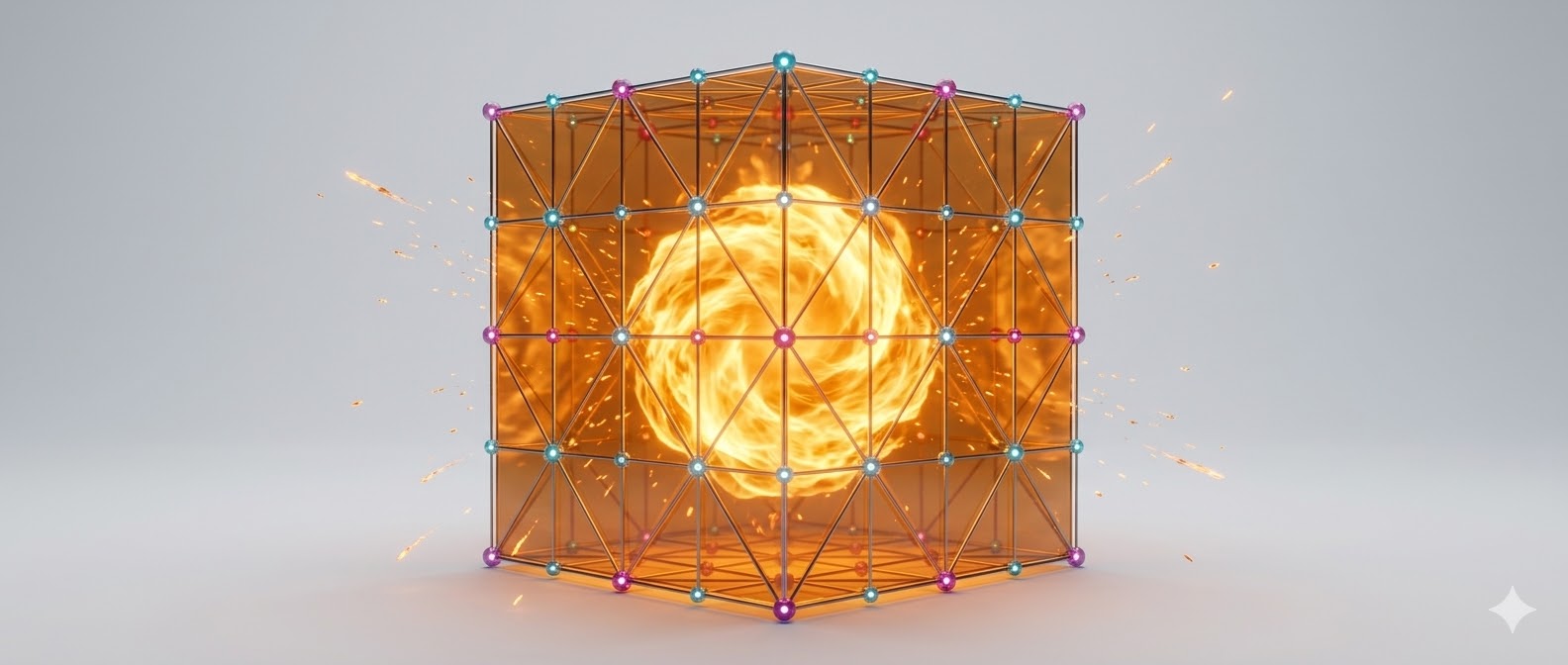
Prometheus stole fire and gave it to humanity. But Zeus never got the fire back. Once given, it cannot be un-given.
The entire vector-space series is now CC BY-SA 4.0. Copyleft. The openness is irrevocable.
Transparency Is Irreversible argued that publishing σ is a one-way gate. Once the market sees your positions, you can’t fog them back up. The economics won’t let you. Copyleft is the same one-way gate, enforced by law.
Fire, Not Swords
This matters more than usual because the blog isn’t documentation. It’s source code. Point an agent at the posts and it builds a working ad exchange. The posts are the spec, the reasoning, the architecture. The generated code is just the compiled output.
Prometheus didn’t give humanity a specific tool. He gave them fire: the thing that lets you make any tool. A spec that an agent can compile is fire. The auction math, the privacy architecture, the billing model: none of these are products. They’re the capability to build products. Copyleft ensures the fire stays common.
The Spec Layer Stays Open
The GPL propagates copyleft through code. CC BY-SA does the same thing for prose. If someone takes these posts, extends the auction mechanism, adds a new privacy layer, improves the billing model, and publishes their version, their extension must stay CC BY-SA. They can’t close the spec.
This is the HashiCorp lesson. Terraform was open until it wasn’t. The community forked it within two weeks. Redis went closed and came back. Every company that tried to enclose an open spec lost. CC BY-SA makes that move structurally impossible. There’s no relicensing decision to make because the decision is already made, permanently. Zeus can chain you to a rock, but the fire is already out.
The Code Layer
Someone points an agent at the blog, generates a working ad exchange. Is that code a derivative work of the CC BY-SA posts?
The conventional answer is no. Copyright covers expression, not ideas. The spec describes the system. The code implements it. Different expression.
That distinction assumed the spec and the implementation were separable. These posts aren’t a description of a system. They’re precise enough that an agent produces working code without guessing. The prose is the program. The agent is the compiler. Compiled output inherits the license of its source. If the source is CC BY-SA prose, the output carries the obligation. Copyright law hasn’t tested this yet. But Prometheus didn’t hand humanity a description of fire. He handed them fire. What compiles from fire is still fire.
Open commons, competitive market. That’s the whole thesis. The spec stays open. Implementations compete. The difference is that competing now means building from compilable copyleft prose, and that carries an obligation.
An Open Standard
A spec that’s public, irrevocable, and copyleft-licensed is one. Anyone can implement it. Nobody can enclose the spec itself. Competing implementations can diverge, but the shared foundation stays common.
The FCC spectrum auctions work because the rules are public and the spectrum is rivalrous. The embedding space works because the math is public and the positions are rivalrous. Copyleft just ensures the rules stay public. The rest is competition.
Richard Stallman understood this in 1983. A Xerox printer wouldn’t share its source code. He built the GPL so that no one could hoard fire again. The same logic applies now: if the source is the spec, the spec must be free. Not free as in beer. Free as in fire.
Transparency is irreversible by economics. Copyleft makes it irreversible by law. The first lock is the market. The second lock is the license. Neither can be picked alone, and together they make enclosure structurally impossible.
Build on it, and keep it open.